Robyn's Cape Bird Chat Photo Blog

Feel free to jump over to my own blog for more on Franschhoek birding.

18 May 2010

Our spotter has arrived

Thanks to all our club members who contributed their items to sell, their time at the tables and their money when buying our olive oil and nectar feeders.  We are now the proud owners of a Sanju Spotting Scope with 20x60x70 magnification as well as a Vanguard MK4 Tripod to hold it.


We took a trip out to Helderberg Nature Reserve last Saturday to try it out and it is confirmed, it works like a charm.  Gone are the birding moments where we are frustrated because we cannot see the birds clearly due to distance... our outings from now on will reveal all birds in all their beauty.


After spending time at Helderberg, we decided to move on to Strandfontein Bird Sanctuary for further spotter trials.  On the way there, we came across a group of 4 African Openbill Storks!  How exciting.  I had seen them before but always at a distance (without a spotter) and this time, they were very close to the side of the road.  Some of us had never seen them so it was a great find.

At Strandfontein we saw a large group of Pelicans which is always lovely to see.  There were numerous other water birds about but far less than usual due to it being winter.

We look forward to going out again and invite all of you to join us on our next outing to get your chance with the spotter....   

Next month, June, we will have 2 international speakers with us, one from Poland and one from Nigeria who are doing research here in South Africa so I hope you will join us for our 12th meeting.  Yes, thats right, JULY is our FIRST ANNIVERSARY.  We will have a very special meeting that night so make sure you diarise it now.   See you all soon and happy birding.

Bird Ringing Course in the friendly city

As you may know, I have just returned from doing a bird-ringing course in Port Elizabeth.  The 8-day course was held as part of the BirdLife Eastern Cape's 60th anniversary celebrations.  


During the week, we also attended evening functions which included a wonderful photographic competition, a talk by BirdLife SA's chief, Mark Anderson on his Lesser Flamingos at Kamphers Dam, Kimberley and also a talk by Warwick Tarboton on nests and eggs.  
 
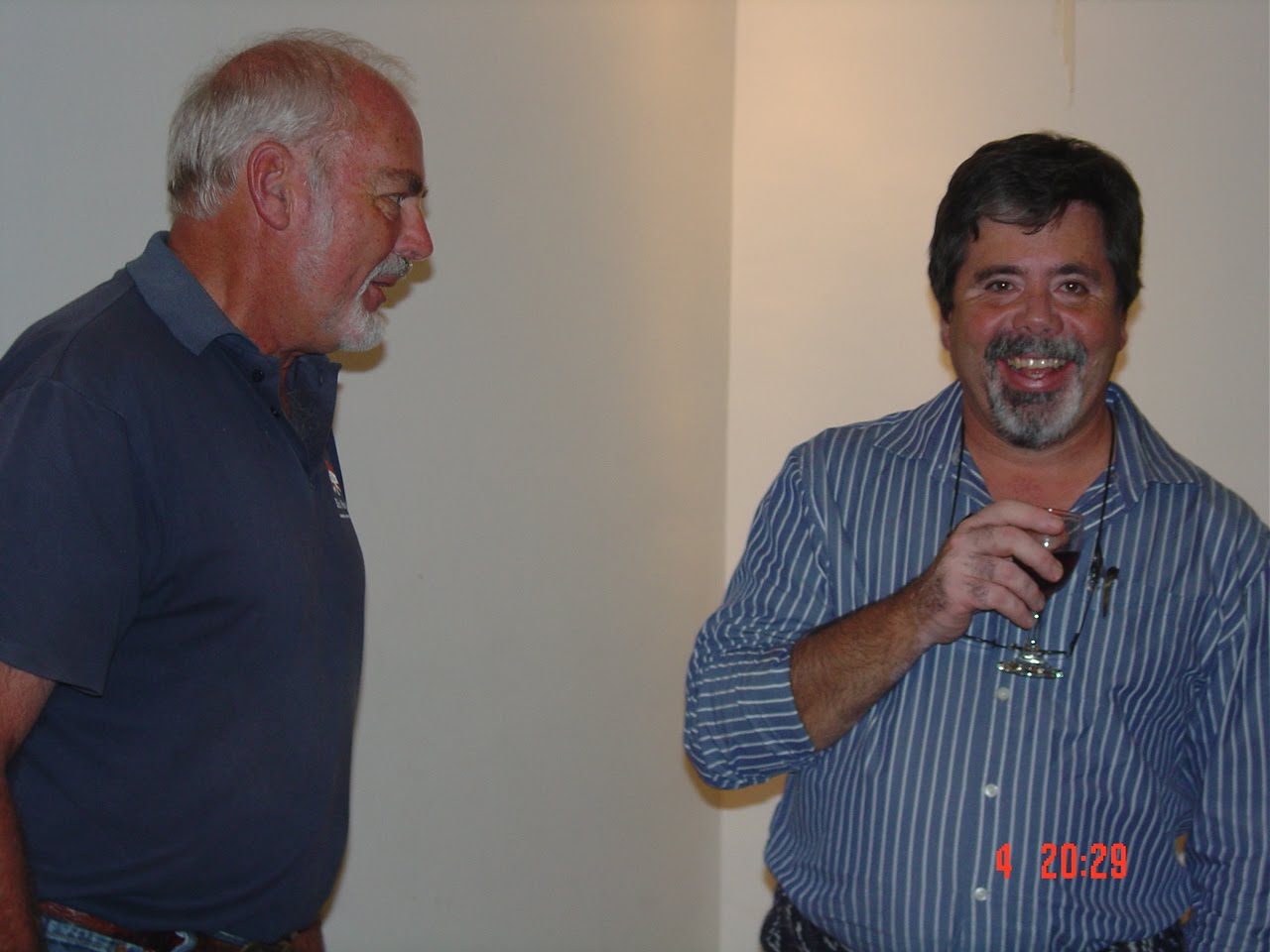
                                                                             Tern-ringer, Tony Tree with Mark
                                                                                                                            Anderson from BLSA.

The club members in Port Elizabeth really live up to the name of the city being the Friendly city.  What wonderful, welcoming and accommodating people.  I had a great time getting to know them all and they were very happy to have me join them from such a far-flung town.  I stayed with a lovely lady called Briar Wright and she was an absolute gem.


Briar Wright (right) with friend Siggie.

The mornings started VERY early each day.  I had to be up at 4.00am to be picked up at 4.45am.  As I didn't have my own car there, I was chauffered around by Albert, the leader of the ringing trainers and my new friend, Gary Sparrow, a fellow-trainee from the Grahamstown area.

                                           Gary won the 2nd prize in the photo competition

First thing that gets done, even before having coffee, is putting up the nets.  Sometimes we put up to half a kilometre of nets.  This has to be done before first light as that is when the birds get up.  

Once the birds start moving, they fly into these fine mist-nets and get caught and we have to start taking them out very carefully and putting them into the bird bags which get hung on a rod, waiting to be processed.

We measure various parts of the bird such as it wing, beak, and tarsus (leg).  We count the feathers and check their condition and of course, put a ring on it!  We also weigh them and try to decide if it is an adult or juvenile and what sex they are... not always easy to see.


                     A Bar-throated Apalis 
                               being processed


The beautiful White-starred Robin, my favourite bird of the week.
The high-light of my week was definitely the White-starred Robin which is not seen all that often as it is a forest bird and quite secretive.  The next best bird was the Knysna Turaco.


                         A gorgeous Knysna Turaco... 

 
Top L: me with Swift Tern                                                 Top R:  Me with African Penguin & staff of SAMREC
Bottom L:  Malachite Kingfisher                                         Bottom R:  Little Rush Warbler

I also got to ring 2 African Balck Oystercatchers, 3 Ruddy Turnstones, a Swift Tern and a Penguin.  Other great birds to ring were a Malachite Kingfisher, a Bar Throated Apalis and quite a few warblers.


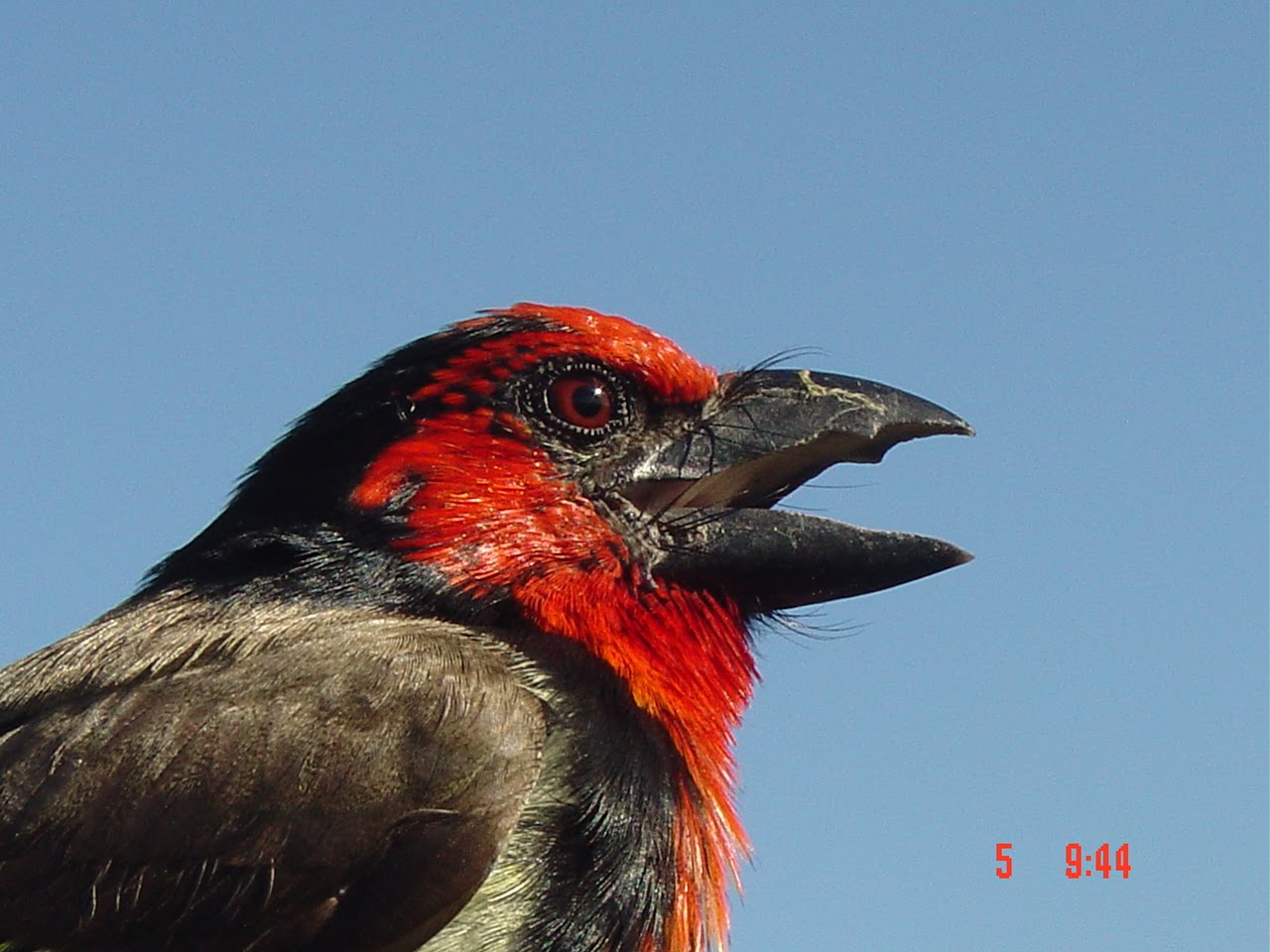
The worst birds to ring were the Southern Masked Weaver, the Southern Boubou, the Black-collared Barbet (the first one to draw blood), and the worst by far, a juvenile Common Fiscal.... eina!! They bite HARD!

L:  This Southern Boubou just didn't want to let go.

There is something so wonderful about being able to hold these goregous birds in your hands and see them up close.  They are not harmed in any way and hopefully, the ring will be recovered or re-spotted again in the future and this information will help us to learn more about them.

L:  Have a look at that beak tooth... no wonder blood was spilled.


In total I ringed 69 birds of 29 different species.  For me to obtain my ringers licence, I need to ring 500 birds altogether of 50 different species so I have a long way to go.  I have invited other ringers to join me here in Franschhoek for some ringing sessions so if you know of any good areas, away from people, with a lot of birds, let me know as we are looking for some good ringing spots.


16 April 2010

April '10

Our monthly meeting was held last Wednesday and our speaker was Doug Harebottle from the SABAP2 (South African Bird Atlas Project) which is run by the ADU (Animal Demography Unit) of UCT.  Doug explained why there is a need for bird atlasing, how it is done and what results have come from the project over the past couple of years.

Atlasing is about listing birds within a pre-determined area, in the order that you see them, for a minimum of 2 hours.  The information we as birders gather in our own area is vital to their project and they see us as Citizen Scientists. 

I have been atlasing birds for a number of years and really enjoy the "birding with a purpose" side of my hobby.
Adel and I went out with Doug on Thursday morning to do some atlasing around Franschhoek and we found the Purple Heron he had mentioned to us at the meeting.  It may still be there for those who would like to see it.  We found it at the entrance road to the Berg River Dam in the patch of water on the right side of the road.  In the same area we saw a juvenile Black Shouldered Kite sitting all alone on a pole next to the road.  He just sat and sat and was not at all concerned about us parked right in front of him taking photos.  Doug sent these lovely pics for us to see.


We will be going out on Sunday morning for a local birding trip but will probably go to the dam and then on the Wellington Road towards Paarl.  If any of you would like to join us, please meet at FTL at 7.30am.

The morning market fundraising is going well.  We have collected R2500.00 so far which is more than half of our target of R4500.00.  Thanks again to those of you who have contributed towards this effort.  The market for tomorrow has been cancelled due to a forcast of rain but hopefully we will be there next week.

Enjoy your week and let me know if you see anything unusual.
Regards
Robyn